Choosing a retirement village is often described as a property decision, although for most people it’s really a decision about how life will work, including the community you will live within.
The house matters, of course, because people who have spent decades making decisions, building careers, running businesses, hosting family, travelling and shaping their own environment tend to understand the difference between accommodation and a home. The deeper question is whether the place you choose as your home? will keep your life recognisable, practical and genuinely your own.
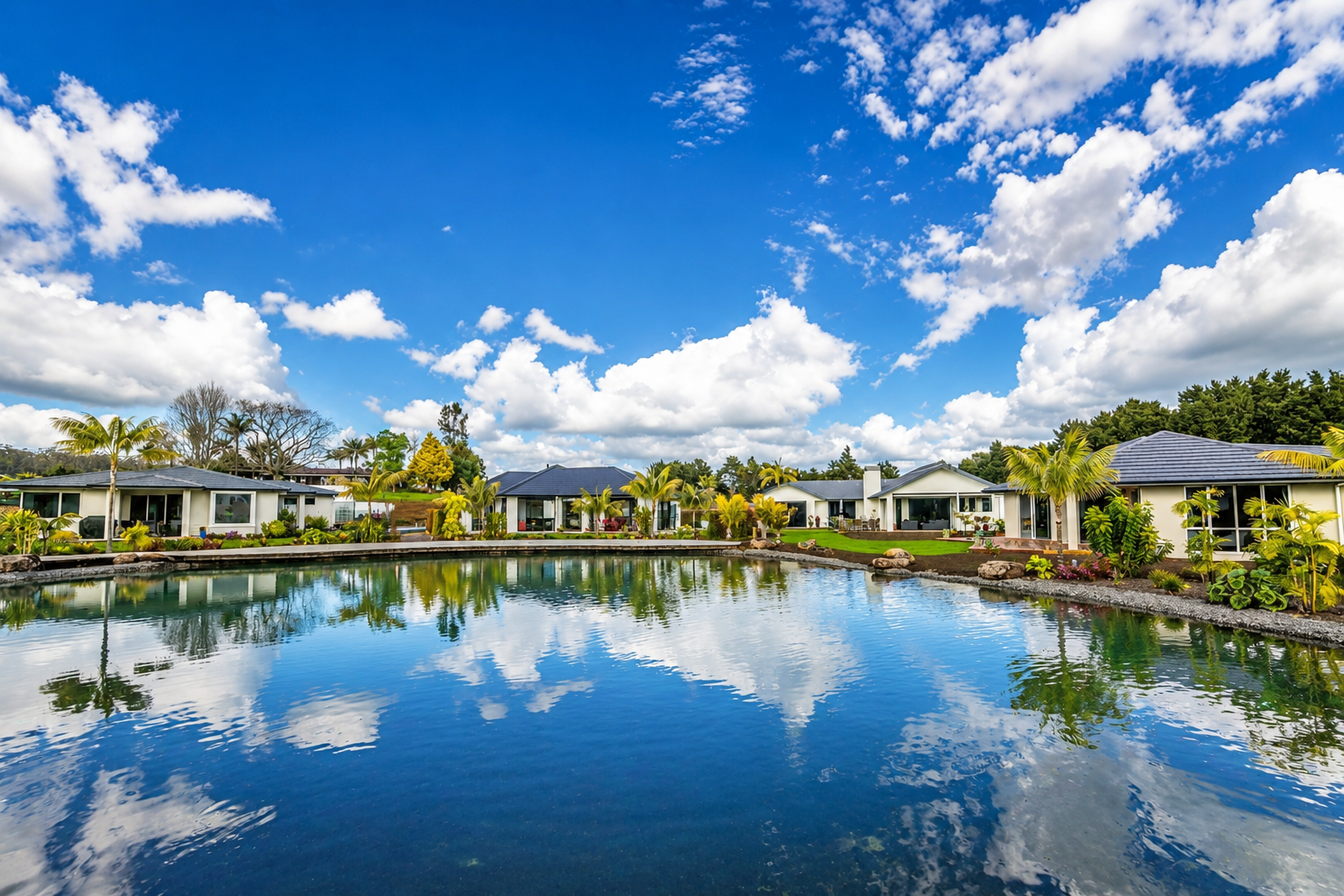
Quail Ridge Country Club answers that question through a country club model of retirement village living in Kerikeri, where substantial homes, established grounds, shared amenities, village connection and the wider Bay of Islands setting mesh together. For people who’ve spent their lives making their own decisions, Quail Ridge offers a way to reduce the practical burden of home ownership while keeping control firmly in their hands.
This is the core of the Quail Ridge difference. It is not simply that the homes are larger, although that matters. It is not simply that the village has amenities, although they matter too. The distinction is that the whole setting has been shaped around a fuller view of later life, where independence, community, privacy, activity and ease can sit together without asking residents to give up the habits and choices that make life feel like their own.
Many people approach retirement living with a concern that is practical, personal and entirely reasonable. They want the advantages of a village, but they still want a home that carries the dignity of the life they have built. They want privacy, room for visitors, storage for the things they use, space for hobbies, and a front door that feels like theirs.
Antonia Dodds’ 2018 Massey University thesis, Old age, retirement villages and New Zealand society, is useful because it looks carefully at how residents make sense of village life. Her research found that people often view retirement villages as a solution to practical concerns around community, security, home design, medical support, care and additional services. It also found that villages can become an imperfect solution when residents feel constrained by rules, financial arrangements or social dynamics.
That finding is important for Quail Ridge because it points to the real test of a retirement village. A good village should reduce friction without reducing the person; it should feel like home, it should feel personal, and daily routine should still feel self-directed. The community should be accessible, but participation should remain voluntary. The support should make life easier, while control remains with the resident.
At Quail Ridge, the home is the anchor, and the village adds ease, amenity, security and connection around it, because people are choosing a place to live, not a system to be absorbed into.
Community is one of the strongest arguments for retirement village living, although it needs to be handled with care. People do not become connected simply because they live near one another. Community works when it is woven into ordinary life, when there are natural places to meet, familiar faces nearby, shared interests close at hand, and enough respect for privacy that people can take part on their own terms.
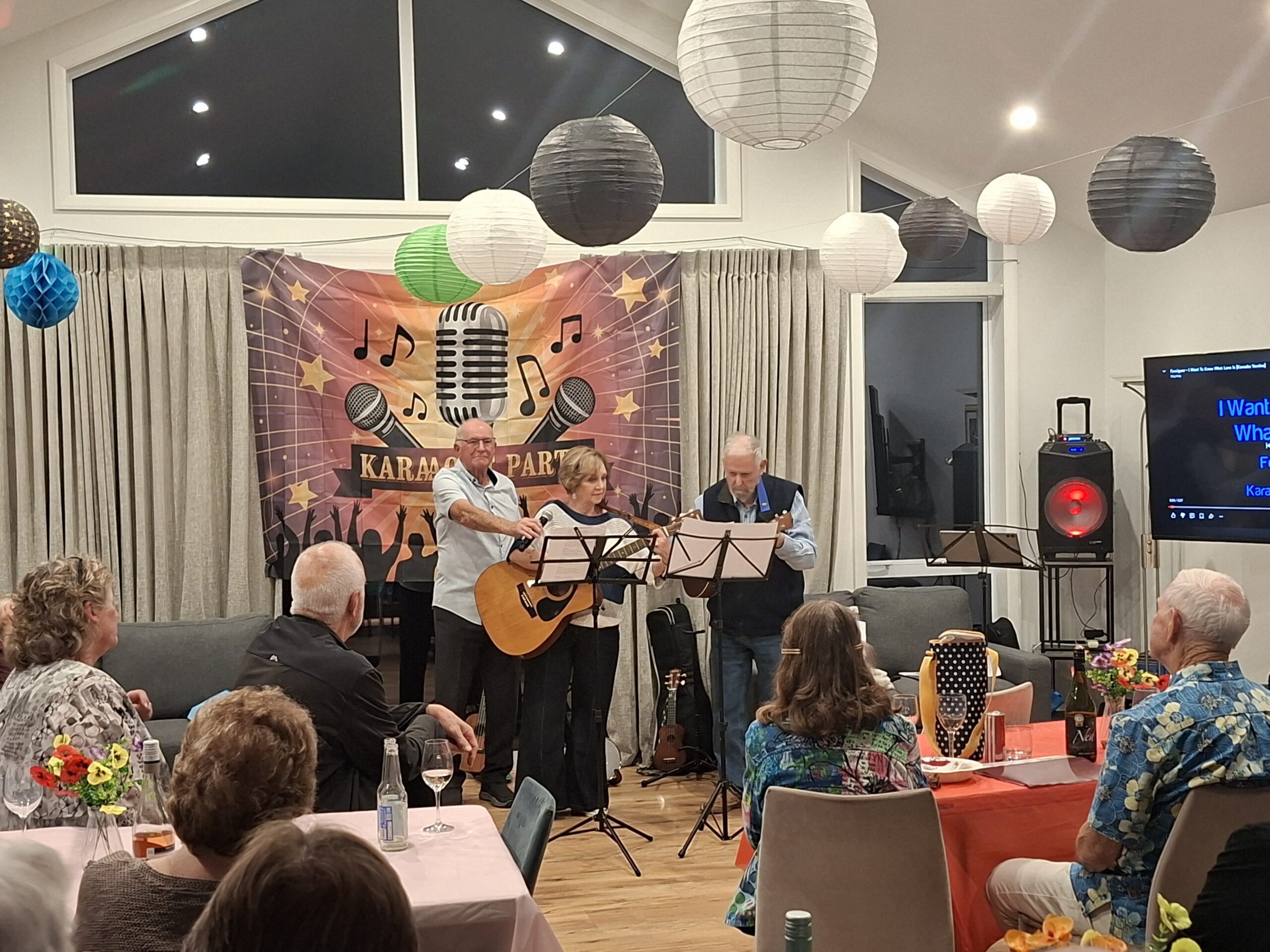
This is one of the practical strengths of Quail Ridge Country Club. The community is not limited to a calendar of events, but it is supported by the whole environment which means community can happen at the Pool House, around the gardens, on the bowling green, through a resident activity, at the workshop, over golf, during a walk, or in a passing conversation. It can also wait for another day, because the right kind of community does not demand attendance.
Bevan Grant’s 2006 article in the Social Policy Journal of New Zealand says retirement villages can provide an alternative lifestyle when changing circumstances start to affect the quality of life people are used to. Grant also says retirement villages can support community and social identity, while recognising that village living will not suit everyone. That balance is useful because it keeps the argument grounded.
The point is not that everyone should be busy, but that connection becomes easier when it sits close to daily life. At Quail Ridge, a resident can join a group, meet people for a drink, spend time in shared spaces, use the facilities, or close the door and enjoy the privacy of home. That’s what a mature community looks like, and it is especially important for people who have spent decades setting their own pace.
For many people, independence has long been tied to the family home because a home gives control, identity and continuity. Over time, however, the work attached to that home can grow with having to tend to the garden and organising contractors. Repairs seem to become more frequent, security grows in importance, and travel becomes harder when the house always needs someone to watch over it.
Quail Ridge Country Club retirement village offers independence with less household weight around it. Residents can lock up and travel, enjoy gardens and shared facilities without carrying the full maintenance burden. They can continue to host family and friends, while knowing the wider village setting is taken care of. In other words, staying connected without needing to organise every social encounter themselves.
Dodds’ thesis is helpful here, because it shows that many of the pressures associated with later life are practical and social rather than simply personal. Car dependent suburbs, unsuitable housing, isolation, maintenance and the expectation that older people will solve everything privately can all make ordinary life more difficult. A well-conceived retirement village responds to those pressures by making daily life easier to manage.
This is where Quail Ridge should be understood as more than housing. The home gives privacy and control, while the village reduces practical friction and the amenities support activity and connection. The setting gives residents access to Kerikeri and the Bay of Islands which, together, create a way of living that protects independence by making it easier to maintain.
Location is often treated as a convenience question, but for retirement living it is also a wellbeing question. A place affects what people can keep doing because it shapes movement, visitors, friendships, routines, and a sense of connection to the wider world.
Many retirement villages are located in heavily urbanised areas where the main appeal is proximity to services. That can work well for some people, but Quail Ridge has a different kind of setting. Kerikeri is a community in its own right, with shops, cafés, services, food, local events, airport access and a strong sense of place. Residents are not cut off from town life. They have a home base within a wider community that still has texture, activity and identity.
The Bay of Islands adds another layer. For people who enjoy golf, boating, fishing, walking, cycling, painting, entertaining, exploring or having family to stay, the surrounding region contributes to daily life in a practical way. A beautiful setting matters most when it can be physically enjoyed. The value of Kerikeri and the Bay of Islands is that the landscape supports the activities, routines and social connections that keep life open.
That is a meaningful distinction for an audience of former business owners, leaders and professionals. Many have led full lives, travelled widely, carried responsibility and made decisions for themselves and others. They are unlikely to be satisfied with a retirement setting that feels compressed. Quail Ridge understands that they are more likely to value a place that gives them room, privacy, activity, good company, and access to a wider community beyond the village itself.
The phrase country club matters because it gives Quail Ridge a wider frame by bringing together home, grounds, activity, hospitality, shared spaces, privacy and belonging. It also avoids the narrower language that can make retirement living sound clinical, managed or standardised.
The 2017 Aotearoa New Zealand Social Work article by Polly Yeung, Gretchen Good, Kieran O’Donoghue, Sarah Spence and Blanka Ros found that subjective wellbeing among retirement village residents was influenced by the social and psychological environment. Their work identifies a dignified environment, positive mental health, relationship building and reducing loneliness and isolation as important parts of wellbeing.
That finding supports the Quail Ridge model because a dignified environment is created through the way a place allows people to live. A proper home supports privacy and self-direction and shared facilities make connection easier. Gardens and open spaces allow movement and ease with the advantage of being connected to the scenic town of Kerikeri, within the wider Bay of Islands region.
This is why QRCC’s difference should be understood as a whole model rather than a list of features. While the homes, gardens, facilities, community and location are connected, each one supports a practical part of daily life. The home protects identity, the grounds support movement and pleasure and the amenities make activity easier.
One of the strongest lessons from Dodds’ research is that people in retirement often resist narratives of decline and loss. They do not want to be spoken to as though age has made them less capable, less interesting or less entitled to choice; it’s a point that is especially relevant to Quail Ridge’s audience.
People considering Quail Ridge have often spent their lives making decisions, including leading organisations, owning businesses, managing families, building assets, serving communities and carrying responsibility. They are not looking for a smaller identity but for a home and a setting that makes the next stage work better.
That is the Quail Ridge difference in retirement village living. It offers real homes rather than standard units and gives residents choice around finishes and layouts. It allows people to lock up and travel and supports community without making participation compulsory. It sits within Kerikeri, a community with its own life and character, and opens onto the Bay of Islands, which gives retirement living a broader horizon. It reduces the practical burden of home ownership while allowing people to remain in charge of how they live.
For the right person, Quail Ridge Country Club is more than a place to live. It is a way to keep living with space, connection, independence and ease, in a setting that respects what people have built and what they still want to do.
Sources
Antonia Tiffany Dodds, Old age, retirement villages and New Zealand society: A critical narrative analysis of the experiences of retirement village residents, Massey University, 2018.
Bevan C. Grant, Retirement villages: An alternative form of housing on an ageing landscape, Social Policy Journal of New Zealand, Issue 27, 2006.
Polly Yeung, Gretchen Good, Kieran O’Donoghue, Sarah Spence and Blanka Ros, What matters most to people in retirement villages and their transition to residential aged care, Aotearoa New Zealand Social Work, 2017.
Ageing Well National Science Challenge, Retirement villages research page.