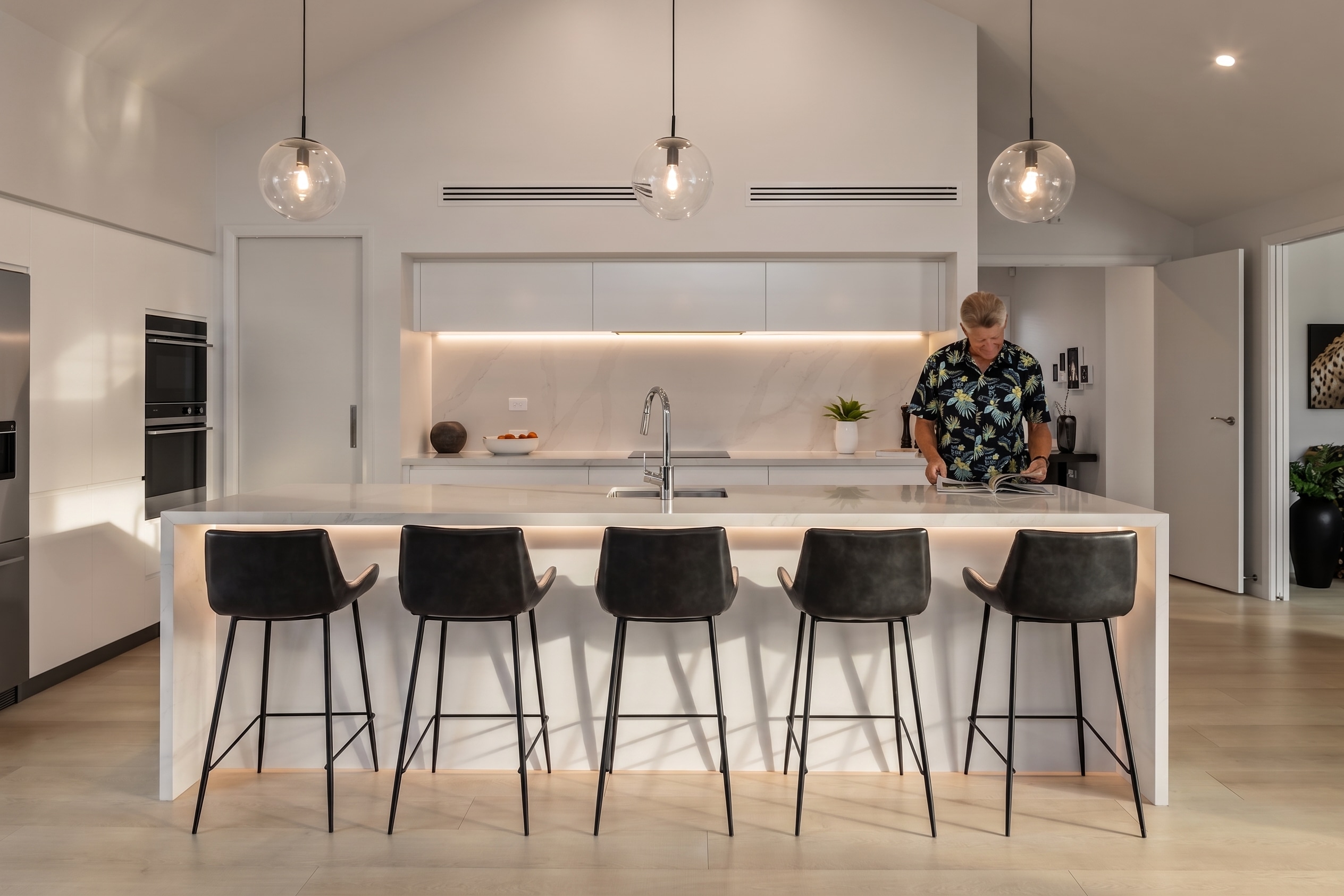
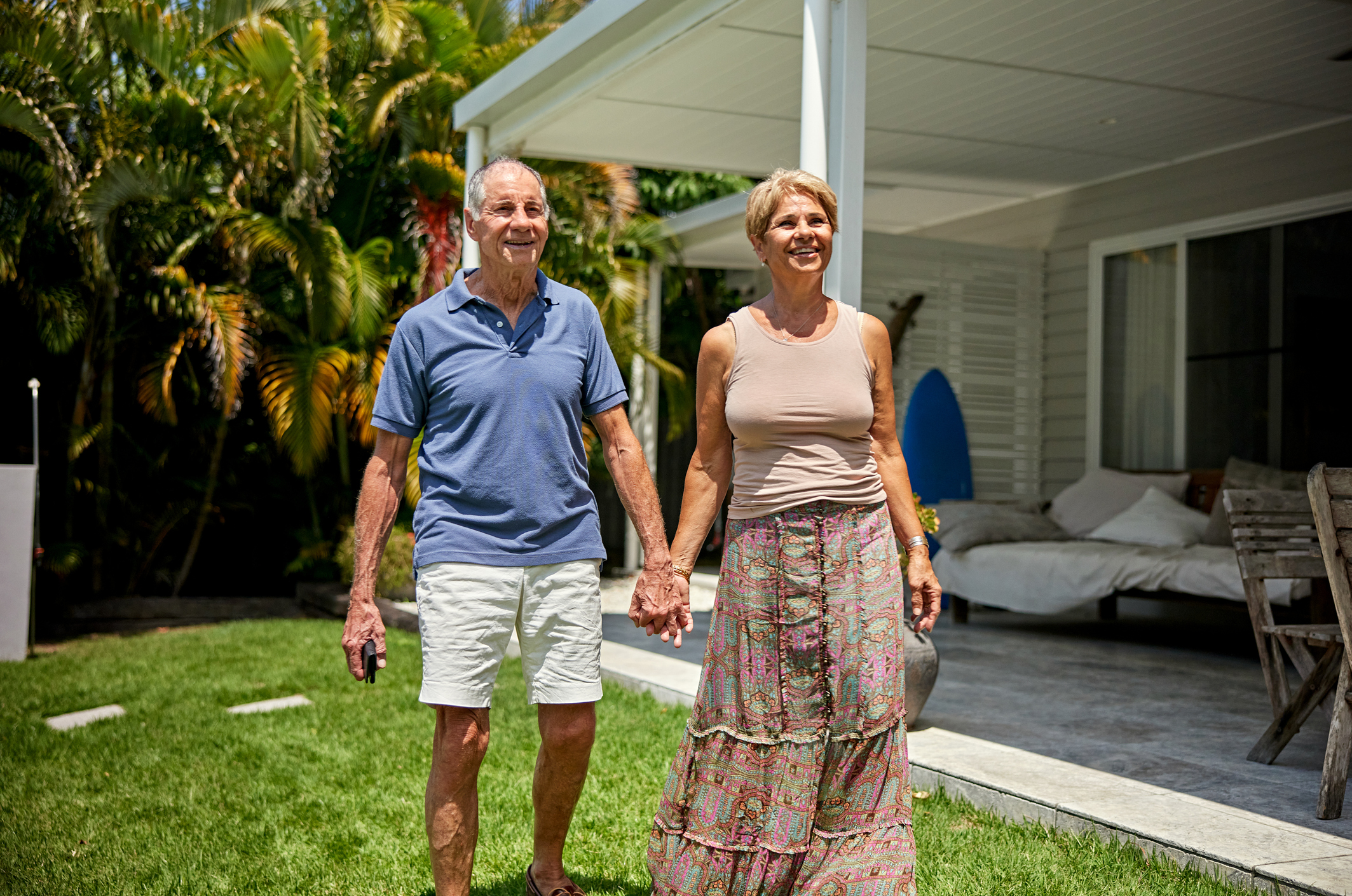
A few years ago a friend of mine took me to visit her mother, who'd just moved into one of the newer small-scale care households near her home. I turned up with the sympathetic face you put on for these visits, the one that says this must be hard, and spent the first ten minutes feeling faintly ridiculous because nobody in the room needed it. There was an actual kitchen with something on the stove, a dog asleep in a patch of sun on the floor, and her mother pottering about deciding whether the scones needed five more minutes. It took about ninety seconds to forget I was in a care facility at all, which turned out to be rather the point.
The household model of care replaces one large facility with a handful of small, self-contained households, typically somewhere between six and ten residents, each with its own kitchen, lounge and front door, staffed by carers who belong to that house rather than rotating through forty rooms on a roster. It sounds like a subtle architectural difference. In practice it changes almost everything about how a day actually unfolds for the people living there.
There are three moving parts to the model, and all three have to shift together or it's just smaller buildings with the same routine inside them.
The physical environment comes first. Instead of a nurses' station and a corridor of identical rooms, a household has a working kitchen residents can smell dinner coming from, a lounge that looks like someone's actual lounge, and few enough people that ten residents can get to know each other properly rather than being processed alongside forty.
The philosophy of care comes second. Meals, activities and the rhythm of the day are built around what residents in that specific house want to do, rather than a fixed timetable designed to move the maximum number of people through breakfast, showers and lunch on schedule. Someone who's always been a late riser gets to keep being one.
The third, and the one people tend to underestimate, is what happens to staff roles. In a traditional facility, care staff, cooks, cleaners and activities coordinators are separate jobs done by separate people passing through. In a household model, a small consistent team does more of it themselves: cooking, cleaning, caring. That sounds like extra work stacked onto one role until you realise it's also what lets the same two or three faces know a resident well enough to notice when something's off.
This isn't just an appealing idea, though it took a while for the research to catch up to the architecture. The best-documented version comes from the Green House model in the United States, where researcher Rosalie Kane and colleagues tracked residents in small ten-person households against residents in traditional nursing homes and published their findings in the Journal of the American Geriatrics Society in 2007. They found meaningfully better quality of life across several measures, including privacy, autonomy and meaningful activity, without any drop-off in clinical care. A follow-up study of families, published in the Health Care Financing Review, found Green House families reported significantly higher satisfaction than families in traditional facilities, with no greater burden placed on them, and almost half described the setting, unprompted, as “homelike, not an institution.”
The Netherlands has run a parallel, longer-running experiment through small-scale group living for dementia care, and the results there are more mixed than the marketing usually lets on. Some studies find clearly better mood and social engagement in small-scale settings. Others find quality-of-life scores land close to good traditional care, provided staff training is equally strong either way. The honest conclusion from that body of research is that the building alone doesn't do the work. It's the building plus a genuine shift in staffing and philosophy, together, that moves the needle.
Closer to home, Auckland University of Technology is currently running a Health Research Council funded study, led by Dr Kay Shannon, specifically measuring outcomes in homelike aged residential care against interRAI quality indicators in New Zealand facilities. It's still under way, but it's a sign the household model is being taken seriously here rather than treated as an overseas import that may not translate.
It's worth asking, too, why every village doesn't already work this way if the evidence points this direction so clearly. The honest answer is cost and staffing complexity rather than reluctance. Running several small households needs more kitchens, more consistent rostering that doesn't flex as easily across a whole facility, and more investment committed before a single resident moves in, instead of the economies of scale a single large facility gets from one central kitchen and one big roster shared across everyone. It's less a difficult decision than an expensive one, which is exactly why it tends to show up in new builds designed around it from the outset, rather than bolted onto a facility built forty years ago as one institution.
Quail House, opening at Quail Ridge in 2028, is being built around this approach from the outset rather than having it retrofitted afterwards. Six rest-home and hospital-level beds sit within a household designed to function like an actual home, adjoining the clubhouse so residents and their partners can move between the two easily. Quail Cottage, a four-bed household next door, is where dementia care will be provided, at the smaller end of the model's usual scale, specifically because the evidence on dementia care leans hardest toward smaller, calmer, more consistent environments.
Ten beds across two households, rather than one twenty-bed wing, might look modest on paper. It's the number that makes the model actually work. Once a household grows much beyond ten, the same problems that show up in large facilities tend to creep back in: more staff rotation, less genuine familiarity, a slow drift back toward timetables over preference.
Dementia is where household living arguably earns its keep the most. A smaller, familiar environment with the same faces every day reduces the disorientation that a long corridor and a rotating roster actively work against. Family visiting Quail Cottage are visiting a small household of four, not a wing, which tends to change the whole tone of a visit from clinical to properly social.
“Household model” has become a phrase operators reach for loosely, sometimes to describe a genuine three-part shift, sometimes to describe a nicer paint job on the same large facility. Worth asking, of any village:
Answer those honestly and you'll know within about ten minutes whether you're looking at the real thing.
Nobody moves into a retirement village to think about which model their eventual care home will use. That's rather the point of writing about it now instead of later. The household model only works if it's designed in from the start: households built at the right scale, staffing built around them, the philosophy embedded before a single resident moves in. Retrofitting a corridor into a household later is close to impossible. Building it that way from day one is simply better planning.
The best measure of any care model isn't how it photographs for a brochure. It's whether you'd be glad to see your own name on the door. That's the actual bar Quail House and Quail Cottage have been built to clear.