

Linda Geor is seventy-five in May and still working full-time from home, which surprises people until they meet her and realise that stopping has never been her default setting.
She logs in each morning after an early walk around the lake, settles into her desk, and moves through the day with the same steadiness she has brought to her career in insurance.
Partner Nigel Edmiston retired before they left Auckland, having spent twenty years as a Vero insurance executive, and most of his life in Torbay, so the idea of moving north was not casual
Their family and long-standing friends were in Auckland, and when you have built decades of routine in one place, you do not discard it lightly. “It was a big decision,” Nigel says. “But one we don’t regret making.”
They had been considering a lifestyle village in a measured way rather than with urgency.
They had seen where Nigel’s mother lived and the kind of life she had there, and it prompted a question about what their own later years might look like. Nigel knew one thing clearly. “We didn’t want to go south where it’s colder,” he says.
So he began looking north, and as he searched, Kerikeri kept surfacing, partly because of the climate, because it seemed to offer a rhythm that felt more aligned with how they wanted to live.
When they first looked at Quail Ridge Country Club online, what caught Nigel’s attention were the gardens, the lake, and the fact that the homes did not appear identical. “They looked individual,” he says. “There were choices, and it felt almost like a resort.”
That description is not about luxury so much as atmosphere. It suggested space and variation rather than uniformity.
They did their due diligence and assessed other retirement villages as part of that research.
At one retirement village, they entered through the gate, saw a row of houses that looked much the same as one another, and did not stay long. “We just kept driving,” Nigel says. What they were responding to was not price or brochure language but a feeling about scale and individuality.
At Quail Ridge, they found old work mates already living there and had not even realised it.
Sitting down with them and asking how they had made their decision proved more persuasive than any marketing material. “We chatted to them about why they chose it,” Linda says. “That made a difference.”
Friends in Auckland raised predictable concerns about healthcare access and distance from major hospitals. Those were not dismissed. They looked into it carefully before deciding to move. “We decided to take the punt,” Nigel says.
In time, real experience replaced perception. “We’ve had lengthy hospital stays,” Linda says. “The medical care here has been very good. There’s an idea that you can’t access proper healthcare up here, but that hasn’t been our experience.”
There were practical requirements from the outset. Linda with four sons, three of them overseas, and Nigel with 4 daughters, they wanted a house that could comfortably accommodate visitors. “We wanted a larger house, and that was non-negotiable,” Linda says.
Quail Ridge identified a site where they could build a four-bedroom home with a generous living area, and because they both enjoy cooking, the kitchen layout mattered. “We knew what we wanted,” they say, and the design reflected that.
Later, when an opportunity arose to move to a home on the lake, the village allowed them to swap. “That flexibility was important,” Nigel says. It reinforced the sense that they were not fitting into a fixed template but shaping something around their own preferences.
Their days now unfold without rigidity. Linda rises early, walks through the village while it is still quiet, then returns home and logs in for work.
Nigel stays up later, sometimes watching the winter Olympics, sleeps longer, and takes on cooking and shopping. He plays snooker, swims, and joins a five-hundred card game each week.
Linda attends ladies’ darts at the weekend, is trialling croquet, walks down the river to the stone cottage, and serves on the residents’ association committee. None of it is compulsory. All of it is available.
“There are about a hundred and ninety residents,” Nigel says. “We’ve made some very good friends.”
The social life is present without being imposed. “You can participate as much or as little as you want,” Linda says. “We don’t go to everything we’re invited to.”
What they notice most, compared with Auckland, is the texture of neighbourliness. In the city, proximity does not always translate into connection. Here, it often does. “You actually know your neighbours,” Nigel says. “And they know you.”
The scale allows for familiarity without intrusion, which is how Linda describes it as feeling more like a neighbourhood than a retirement village.
There are also practical advantages that only become obvious once you live there. As tasks become more physically demanding with age, having people available to assist with small jobs matters.
“There are lots of little things around the house,” Linda says. “As you get older you can’t lift what you used to or put something up in the ceiling, so the Quail Ridge team steps in without fuss.”
Nigel mentions mail being delivered to the door when it is missed and staff bringing wine down from their cellar. “They go beyond,” he says. The staff know residents by name, which in a community of this size is not incidental.
Family life has adapted rather than diminished. “We don’t see our children any less than we did in Auckland,” Linda says, “but the quality of the time is better because they stay here.”
Sons from overseas have lived in the house for short stretches, including one who looked after it while Linda and Nigel travelled. As long as the village is informed, there is flexibility around that.
When asked how they would describe Quail Ridge now, Nigel pauses and chooses his words carefully. “It’s very much like a country club,” he says, by which he means there is space, activity, and choice, rather than regimentation. Linda adds, “You get as much or as little as you want.”
They arrived without rigid expectations and without the sense that they were closing something down. What they found was a place that allowed work to continue, friendships to deepen, family to visit comfortably, and the practical weight of property maintenance to ease. “We have no regrets,” Linda says.
For them, the move north was not about leaving Auckland behind in disappointment or urgency. It was about deciding where they would prefer to live the next part of their lives, and choosing a place that matched that preference.
Tony Headland still laughs when he talks about the first visit. “We came up with friends on a road trip,” he says, “We weren’t interested in or shopping for a retirement village.
“We drove through the gate,” says Liz Headland. “And I said I could live here. It was pretty instant.”
At the time, Auckland still defined their lives. Howick. Corporate roles. Coastguard callouts at three in the morning in weather that most people prefer to avoid. “I’d been in the corporate world all my life,” says Tony.
“You’d take me out of that house in a box,” he told Liz once. That was the assumption.
What they encountered at Quail Ridge Country Club in Kerikeri did not resemble what they had filed away in their minds under the phrase retirement village. “The gardens did it,” Liz says.
“We fell in love with the gardens. Then we looked at the houses and thought, wow. It didn’t feel institutional. It felt like somewhere people actually lived.”
They did not buy a finished home, but the idea of what could be while standing on what Tony described as “piles of shingle and road metal.”
The section they chose was a corner site, nothing more than ground and a plan. “We said, give us the map and the specs for the house and we’ll tell you if we’re going to sign,” Tony says. “We went with faith.”
It was a risk of sorts, though he does not speak about it as one. “We ended up with the most beautiful home on the most beautiful site.”
The house is large by any measure, around 300 square metres, with a two-hundred-square-metre deck extending its footprint into the landscape. There is a four-car garage, which is less a luxury than a necessity.
“We’re motor vehicle enthusiasts,” Tony says. He owns a 1932 Ford Deuce Coupe, the kind made famous by the Beach Boys, among other vehicles. “Other villages, what you walk into is what you get. Here we chose everything. Colours, flooring, benches, the deck. We extended the garage. We put in a walk-in pantry. We changed windows to sliders. They accommodated us brilliantly.”
Liz sees that flexibility as central rather than cosmetic. “They really let the new buyer choose everything,” she says. “It’s our home.”
For years, their leisure time had been structured around the city. They owned a decent-sized boat and imagined that retirement would allow them to use it more often. “In Auckland we were serious boating people,” Liz says. “We’d go every weekend.”
“But in the last two years here, we used it twice.” The explanation is not a loss of interest but an accumulation of alternatives.
“Total change of lifestyle,” he says. “In Auckland you were lucky if you knew your neighbours. We might wave if they drove past, but you didn’t know their name. Here, there are about two hundred people, and we’ve made some awesome friends. We’ve created our own wine club. We hold progressive dinners. There’s so much to do.”
Liz describes the social life in terms that are less about activity than about assurance. “The first thing about this village,” she says, “if I lost Tony, I will never be alone.”
She has watched other couples go through that transition. “We’ve lost friends, and everybody works in together so that the person is never alone. You can be alone if you want to be. But you’re not left.”
In suburbia, she says, the practicalities after a loss can be overwhelming. “The house is too big. You’ve got to sell it. You’ve got to go and do this or that. Here, you stay where you are because your people are here.”
Tony had spent years volunteering for Coastguard, responding to emergencies during literal dark and stormy nights. After moving north, he shifted to St John.
“Not the emergency side,” he says, “but hospital and patient transport. I know what I’m doing the day before. I’m heading up a small team with three drivers.” The rhythm suits him because it is structured but not consuming.
Liz, who is an artist, spends much of her time painting. “I’m more of a private person,” she says. “I stay at home and do my art.” Recently she has taken up croquet, though not within the village. “Different age group. Different people. You have that choice.” The word choice comes up often in conversation.
They both push back against a perception that retirement villages are defined by frailty.
Through his St John work, Tony has seen other retirement communities. “Most of the time, you hardly see anybody in those places,” he says. “When you do, they’re in walkers or wheelchairs.”
At Quail Ridge Country Club, he says, “people are active. Walking. Swimming. Playing bowls.” He walks six kilometres most days, often along the Kerikeri River track, disappearing into bushland that runs close to the village boundary. “We walk in the most picturesque places. Rainbow Falls is at our front gate.”
Quail Ridge sits surrounded on three sides by the river, about a kilometre from the nearest main road.
“It’s quiet,” Liz says. “Peaceful.” They have become attentive to birdlife in a way that surprised them.
“We didn’t think much about birds in suburbia,” Tony says. “Now we’ve got tuis on our deck drinking from a bowl of sugared water.”
For all the social activity, they insist there is no pressure. “Some go to everything,” Tony says. “But not everybody.”
Liz says there’s no snobbery or cliques. “We’ve heard that happens in some villages. Here, you might not be best friends with everyone, but we all get on.”
They signed up at 65; timing Tony frames as practical. “If you’re not ready, why not come in while you can enjoy it? What’s the point of waiting?”
He dismissed the idea that moving into a village marks the end of something. “People think this is the end of the road,” he says. “It’s not. It’s a lifestyle.” He gestures towards the pool, the workshop, the shared spaces. “Wine rooms, verandas, art room. We’re active and enjoying ourselves.”
Liz sums it up more simply. “It’s better than what we imagined,” she says. “We didn’t imagine the closeness and the friendships we would make. That’s the biggest gain.”
They came north without children nearby to anchor them because their family lives in Australia. What held them back, if anything, was habit. What drew them forward was less about square metres than about atmosphere. “We weren’t thinking retirement village,” Tony says. “We were thinking, this is a nice place to live.”
The distinction matters to them because they don’t describe their move as downsizing or slowing down. They describe it as a reallocation of attention, away from maintenance and towards living.
“Every day feels like a holiday,” Tony says, though he immediately qualifies it. “Not because you’re doing nothing. Because you’re doing what you want.”
Philip and Jackie Dring had not been planning a move to Kerikeri because they had three children scattered across the country and, like many Aucklanders, had assumed they would remain where they were and orbit around family as needed.
“The nice thing about living in Kerikeri,” Philip says now, “is that we decided we’d go where we want to live, and visit them any time. There’s always a risk your children move for their careers, and you end up staying somewhere that no longer suits you.”
The shift began almost casually. A university friend from South Africa had settled at Quail Ridge Country Club, and when Philip and Jackie were in the area, they dropped in to see them.
“We were actually thinking about where we might move within Auckland,” Jackie says. “Then we saw their place and realised we don’t have to stay in Auckland.”
What struck them first was not a sales pitch, but proportion. “The size of the homes, the space between them, the location,” Philip says, “it felt very different.”
They had seen other villages. Philip had even ferried retirees from various complexes and could not help comparing. “We couldn’t believe the difference between those units and what was on offer at Quail Ridge. The spaciousness between the dwellings is generous. We look straight onto DOC forest.”
They were clear about what they wanted. “We said we wanted a three-bedroom, double garage,” Jackie says. “We’d been around the more commercial retirement options in Kerikeri and they weren’t a patch on Quail Ridge.”
Visiting other villages became part of their due diligence. “It confirmed we’d made the right choice,” Philip says.
Friends were sceptical at first. “Some of our friends are very active and mobile,” Jackie says. “When we told them we were looking at a retirement village, they were surprised.”
“We say it’s a country club, not a retirement village,” says Philip. “When they come and look, they can’t believe the features and the benefits.”
The idea of leaving Auckland was not about retreating but about reframing. “We were in urban, central Auckland,” Jackie says. “There was no space for the campervan, and we spent all our time getting somewhere.”
The more they considered it, the more logical it became. “If we’re moving to a new area,” Philip says, “why don’t we do it now, properly, and do it once?”
That decision was informed by experience. “We helped our parents through three different moves in retirement,” Jackie says. “It was tough, so we didn’t want to do that. We wanted to get in early, do it once, and not worry.”
They signed at a stage when earthworks had not yet begun. “It was pre-build, Stage Five,” Philip says. “It hadn’t even started, which gave us an opportunity to shape it.”
They had specific requirements. “We’ve got a 6.5 metre surf ski,” Philip says. “So they extended the garage for us.”
They spent eighteen months in temporary accommodation within the village while their home was completed. “By the time we moved in, we’d had a say in the paint, the fixtures, the finishes,” Jackie says. “We chose the section, the house, the interior. Other places prescribe what you’ll get. Slight variations, but all the same. All vanilla. Here it was different.”
Freedom and flexibility mattered. They opted for campervan parking on site, something Philip notes is “not something most villages offer.”
They travel extensively, both within New Zealand and overseas. “We’re only in the village part of the year,” Jackie says. “We go south in the campervan, kayaking in Abel Tasman, we cycle wherever we can find a cycle route.
The house, maintained and secure, allows that mobility. “All the freedom and time to play,” Philip says, “with none of the worries of operating your own property.”
Life within the village is active but not prescribed. Philip says. “We’re active outside the village as well as in it.” They both play bowls, and there is model yacht racing, darts, a knitting and crafts group where, Jackie says, “eighty per cent might knit two rows, and the rest is catching up on what’s happening.”
There are Friday socials, wine groups, cuisine evenings, a writers’ group. “There isn’t a typical day,” Philip says. “You can be involved as much as you want, or step out. There’s no pressure.”
What surprised them was the depth of connection. “We hadn’t expected that everybody is free to do things together,” Jackie says. “Go to movies, offer lifts. If you’re unwell, somebody will lend a hand.” For those without children nearby, she adds, “this is where they can find family.”
The physical environment reinforces that sense of ease. They swim regularly at the aquatic centre. “It’s fantastic,” Philip says. “Pool, saunas, showers. We do our lengths and get that level of activity as well.”
The gardening team manage the grounds. “They’re helpful and knowledgeable,” Jackie says. “They create and build an environment around your home. You don’t have to do it.”
Kerikeri itself is part of the equation. “There’s an airport here,” Philip says, almost as a practical footnote. “It makes travel easy.”
The golf club, church community, local events all feed into daily life. “Kerikeri suits our lifestyle and provides our lifestyle,” Jackie says.
There have been small moments that confirmed their choice. Philip recalls a resident’s registration plate – JHB TVL (Johannesburg, Transvaal (now Gauteng), where Philip is from) – that sparked conversation on arrival. “It’s a silly little thing,” he says, “but it got involvement going.” They fitted in more easily than expected. “That surprised us in a positive way,” Jackie says.
Five years on, their assessment is measured. “It’s provided everything we wanted,” Philip says. “We couldn’t wish for a better place.”
Management, they say, has been responsive. “If there’s a problem, it’s dealt with swiftly,” Jackie says. “You’re not fobbed off and not forgotten.”
The move, which once seemed a departure, now feels like consolidation. “I never thought retirement or being older would be so much fun,” Jackie says.
Philip nods. “We realised we didn’t have to stay where we were. We could choose the place that matched how we actually live.”
For them, that choice was not about stepping back. It was about stepping into a version of life that still accommodates kayaks, campervans, overseas flights, bowls afternoons, and the quiet reassurance that this move, made early and made once, was the right one.
Malcolm and Peggy Carlaw were not house hunting. They were driving, as they often do, heading toward the golf course and following the road more out of habit than intention when Malcolm noticed homes being built off to the side. “We thought, let’s just go and have a look,” he says. “Something to do.”
They turned in without having seen the sign at the gate and drove slowly through landscaping that caught them off guard. There was a bowling green, a swimming pool, and mature planting that suggested the place had been there far longer than it had. “We were saying, what is this place,” Peggy recalls. “It didn’t look like what we thought a retirement village would look like.”
Eventually they saw a sign for the sales office and decided to stop. Sales manager Glenn Roberts showed them two or three homes, explained what Quail Ridge was, and walked them through the layout of the community.
“We bought the one we’re in now,” Malcolm says, with the ease of someone who recognises that snap decisions are part of his wiring. The house had belonged to the original designer, almost a show home, and it sat down by the lake. “It met our criteria,” Peggy says.
Prior to Quail Ridge Country Club, they were living in Nelson, in an apartment by the river that had seemed right at first but proved smaller than anticipated. “We were moving into something with more square footage,” Malcolm says.
Nelson felt geographically constrained for two people who enjoy exploring the countryside. “You go one way or another,” he says. “Here, you can head off in six different directions.”
With property in the United States, they went back to the US to sell their home there. But even before that, the decision not to return to the United States had crystallised over time, especially after COVID.
As it was, when they did travel back to the US, what stayed with them was the memory of Quail Ridge. “The landscaping really stuck in our minds,” Peggy says. “It felt open, established.”
“Quail Ridge Country Club is different,” Malcolm says. “It’s more around The Lodge, but it doesn’t feel like everything revolves around one activity.” The layout, he notes, could pass for a regular neighbourhood. “If you didn’t know, you wouldn’t necessarily think it was a retirement village.”
What appealed to them was that the house itself felt like a real home. “It’s not a unit,” Peggy says. “It’s a proper house.” It is laid out in a way that could accommodate a caregiver at one end if ever needed, while allowing them to live independently in the other. That possibility sits in the background, not as a plan but as reassurance.
Security, for Peggy, carries particular weight. “The women in my family live a long time,” she says. “My mother lived to a hundred and four.” She does not dwell on it, but the implication is clear. “If I left the door unlocked at night, I wouldn’t feel panicked. I know I’ll be okay if I get old and can’t take care of myself.”
The practical benefits are not abstract. They can lock up and travel without compiling a list of neighbours to check on the property. Lawns are mown. Gardens are maintained. Windows are washed.
“We can leave and know the place will be in fine shape when we come back,” Malcolm says. They take two or three international trips a year and are overdue for another road trip south. “We do travel more now,” Peggy says.
Malcolm and Peggy are serial entrepreneurs by background. Their most recent business helped companies improve sales and customer satisfaction, often in the high tech sector. “We’d teach them how to deal with customers better,” Malcolm says. Sitting at a desk and solving problems is not a habit easily shed. He keeps orchids, pursues photography, and spends time with the Quail Ridge ukulele group and the Bay of Islands Singers.
Peggy volunteers extensively with Rotary, but enjoys time to pursue things she didn’t have time for while working.“When you’re working and something on the computer breaks, you find a workaround,” she says. “Now I can actually fix the problem itself.”
Between the village and the wider Kerikeri community, they can keep their days as full as they wish. Pilates, walking trails that run past Rainbow Falls, swimming, choir rehearsals, ukulele sessions, weekend drives into the surrounding countryside. “You can belong to things,” Peggy says, “or you can not show up, and that’s fine too.”
When they first moved in, they were struck by the hospitality. Offers of invitations arrived quickly. “People are very welcoming,” Malcolm says. Over time, it has settled into something less formal and more like a neighbourhood.
While Peggy and Malcolm were driving around the Quail Ridge village considering their purchase,, they stopped to talk with a woman walking along the road. Within minutes, she invited them over to see her home and talk about life in the village. Some residents arrive knowing nobody in town; others already have established networks. “You can have a life where you just do you,” Peggy says. “If you want instant friend opportunities, they’re there.”
Malcolm is thoughtful about the trade-offs often associated with retirement villages.
“People think you lose control and trade it for safety and convenience,” he says. At Quail Ridge, he feels that balance is handled differently. There is governance around the homes, and certain structural changes are not possible. “You can’t just move a wall,” he says with a shrug. Yet within those parameters, there is leeway in how they live and what they pursue.
“They’re not trying to extract every last dollar out of us,” he says. “It’s a business, of course, but they seem genuinely interested in us having rich and productive lives as we design them.”
As they age, the practical limits of energy and strength are acknowledged. They have seen it in their parents. “We can’t do everything we used to,” Peggy says. “But we can do most of it.”
For Malcolm, independent living means being able to decide what to do and when to do it. “I can do whatever I want when I want to do it,” he says. The support sits in the background, ready but not intrusive.
He is aware that many people still picture retirement villages as institutional, recalling an era of nursing homes that felt clinical and bleak. “Things have changed,” he says. “Boomers have different expectations. We’re more active. We live longer.”
In his view, Quail Ridge represents that shift. “It’s the same life you’d have in a suburb, just with some support.”
Neighbours sometimes describe it as feeling like a resort. Malcolm prefers a simpler term. “It’s a nice neighbourhood,” he says.
At its centre, Peggy adds, is community. “That’s the heart and soul of this place.
Scale influences experience in ways that are often felt before they are analysed. At Quail Ridge Country Club, the size of the community shapes the tone of daily life in Kerikeri and within the wider Bay of Islands. The village is large enough to offer meaningful facilities, landscaped grounds, and future development confidence, yet measured carefully so that relationships remain personal and familiar.
With a staged pipeline of further residences, the community has grown deliberately rather than rapidly. Growth has followed a considered plan rather than a race for volume. This measured approach ensures that each new stage integrates with the existing landscape, preserves open space, and maintains the character that residents value. It also allows management and staff to know the people who live here as individuals rather than numbers within a system.
In practical terms, boutique scale means that residents recognise one another. Conversations pick up where they left off. Staff know names, preferences, and the small details that matter. Questions are answered directly, without being routed through layers of administration. Maintenance requests are handled by people who understand the setting and the expectations of those who live within it. The experience feels attentive because it is structured around a community of manageable size.
The physical environment reinforces this. Homes are set within 42 acres of landscaped, subtropical grounds, creating generous space between residences while keeping distances walkable. Lakes, gardens, and pathways connect rather than divide. Totara Lodge, the pool house, the bowling green, and the workshop sit within easy reach, allowing incidental interaction without requiring formal gathering. The village feels lived in because activity unfolds naturally across spaces that are used regularly rather than showcased occasionally.
Boutique scale also influences how marketing and storytelling are approached. The strategy has shifted from promoting property listings to presenting life within the community. That shift relies on authentic resident stories rather than stock imagery, because a smaller community allows real voices to shape the narrative. Profiles, blogs, and photography focus on individuals and their routines, reflecting the lived reality of the village rather than a generic retirement template. This aligns with the broader positioning around people, personality, and place.
From a sales perspective, scale affects the quality of enquiry and conversion. The inbound roadmap recognises that awareness alone does not secure sales, and that emotional readiness must be built gradually. A boutique environment supports that process because visitors can meet residents, walk the grounds without feeling lost in a complex, and imagine themselves within a community that is visible and understandable. Open days are designed as hosted experiences rather than inspections, reinforcing intimacy over volume.
Financially, the marketing analysis shows how heavily previous strategy relied on paid search and performance advertising. A boutique village does not need to compete through sheer advertising weight. Instead, it builds recognition through consistency, storytelling, and presence within the Bay of Islands and Northland communities. The annual budget structure allows for a full content and PR programme while remaining within the existing envelope. The emphasis shifts from traffic buying to identity building, which suits a village whose strength lies in character rather than scale.
For residents who have moved from Auckland, Tauranga, Northland or elsewhere, the difference is tangible. Large metropolitan developments often rely on density and efficiency. Here, the rhythm is steadier. Paths are not crowded. Shared spaces feel proportionate. Staff interaction remains direct. The village sits within Kerikeri rather than apart from it, and residents remain connected to town bothwell and village life.
Boutique scale, therefore, operates across physical, social, and operational dimensions. It ensures that growth remains aligned with landscape and lifestyle. It allows management to remain accessible. It supports marketing that is grounded in real people rather than abstraction. Most importantly, it sustains an atmosphere that feels settled and personal. The village carries the confidence of thoughtful planning without adopting the anonymity that often accompanies expansion.
At Quail Ridge Country Club, scale is not a limitation. It is a deliberate choice that preserves character, reinforces connection, and allows the community to remain recognisable to itself as it evolves within the Bay of Islands.
In The Tortoise and the Hare, Aesop tells a story that is often misunderstood. It is usually framed as a lesson about arrogance or patience, but its quieter truth is about sustainability.
The tortoise doesn’t win because he tries harder. He wins because his movements can be repeated day after day without relying on bursts of energy or motivation. His progress fits his environment and his capacity, which means it lasts.
That idea matters more in later life than we tend to admit.
Most New Zealanders do not wake up one morning and decide to leave the city, because where we live has a way of becoming the default setting for life. Family lives nearby, specialists and hospitals are within reach, the airport is close enough to feel reassuring, and even friendships that have drifted into occasional contact still sit within the same familiar orbit.
Over time, that closeness begins to feel like a reason to stay, even when daily life has subtly narrowed, not through crisis or dissatisfaction, but through habit.
And yet, for many people, cities like Auckland can begin to feel louder than they need to be, not only in sound, but in pace and expectation. Traffic becomes a constant negotiation, simple errands require planning, and there is often a low-level sense of urgency that lingers long after work has stopped, setting the rhythm of the week. When that pressure doesn’t lift as expected, people notice their days feel busy without necessarily feeling full.
This is often the point when the winterless Bay of Islands enters the conversation, not as an escape or a fantasy, but as a recalibration. Life in the north does not remove choice, but it redistributes it, allowing days to stretch more easily and everyday tasks to require less effort. The outdoors stops being something that needs to be scheduled and instead becomes part of the background, waiting quietly until you feel like stepping into it.
Living in the Bay of Islands changes the texture of daily life in ways that are difficult to measure but easy to feel. Water is closer, walking becomes habitual rather than purposeful, and activities such as golf, cycling, and boating slip naturally into the week rather than being reserved as weekend rewards. This matters because active living only works when it is easy to sustain, not when it depends on motivation alone.
For Kiwi city dwellers, considering relocation, the real question is rarely whether they could live elsewhere, but whether life would genuinely feel better rather than simply quieter. That distinction matters, because silence on its own does not create fulfilment, and space without structure can feel empty rather than freeing.
This is where Quail Ridge Country Club begins to make sense, not because it replaces city life, but because it edits it. The country club setting offers community without obligation, activity without pressure, and structure without prescription, allowing independence to remain intact rather than something that needs to be defended. Like the tortoise’s steady pace, the environment quietly supports consistency rather than demanding effort.
Many people reach this stage of life living in homes that once made sense for busy families but now mostly demand maintenance. Downsizing is often framed as a financial decision, yet the more persuasive argument is time. Fewer responsibilities mean fewer weekends spent fixing or managing, and more capacity for travel, for unhurried family visits, and for days that are allowed to unfold without a checklist.
Of course, relocating north introduces distance, but distance today is different from distance as it once was. Flights are short, drive times are manageable, and visits become planned rather than incidental, which often makes time together more deliberate and, in turn, more meaningful.
Beneath all of this sits a quieter question that New Zealanders do not always articulate until they are already asking it. What, at this stage of life, am I optimising for?
Staying in a city can be the right choice, but so can leaving, not because something is wrong, but because something else may fit the life you want to keep living. Relocating to Kerikeri, and into a community shaped around independence rather than retreat, is less about stepping away than it is about choosing conditions that make living well easier to sustain over time.
Imagine the difference between a cruise ship and a small, well-made sailboat.
A cruise ship is designed to remove decision-making. You board, and from that point on the day belongs to the vessel. Meals appear at set hours. Destinations are announced in advance. Activities are suggested, encouraged, sometimes gently herded. You can retreat to your cabin, but even there you are aware that life is moving according to someone else’s plan. It is comfortable, it is efficient but it is not yours.
A sailboat is something else entirely.
You leave the harbour when you are ready. You choose the course, or you choose not to choose at all and simply drift for a while. Some days you move with purpose, sails full, the horizon pulling you forward, and on other days you anchor and stay put, content to watch the weather pass and the light change.
The boat supports you but doesn’t control you. It gives you shelter, balance, and confidence, while leaving the decisions firmly in your hands.
Independent living, as it exists at Quail Ridge Country Club, belongs to the sailboat, not the cruise ship.
It begins with the assumption that life is still being lived, not managed. Residents live in their own homes and shape their days according to their own habits and interests. There are no bells, no schedules, no implied timetable for how one should behave at a certain stage of life.
Independence here is not about being left alone. It is about being trusted to live well.
The country club setting plays an important role in this. It creates an environment where choice is always present but never pressing. Shared spaces are there when you want company, conversation, or activity. They recede politely when you do not. You might spend a morning on the golf course, an afternoon walking or cycling, an evening hosting friends, or a day doing very little at all. All of it belongs to you.
This kind of independence is quietly supported by thoughtful design. Homes are low maintenance, not because life should be simplified, but because time and energy are better spent elsewhere. Grounds are cared for. Practical distractions fade into the background. What remains is space, both physical and mental, to keep doing the things that matter.
It is equally important to understand what this way of living is not.
Independent living is not assisted living
There are no routines imposed, no expectation of care, no sense that someone is watching or waiting to intervene. Residents are capable, engaged, and self-directed. While future support may exist within the broader village environment, it does not define the present.
It is not institutional because life here does not echo with corridors or procedures. Instead homes reflect the people who live in them. Spaces feel settled, personal, and lived in.
And it is not a retreat from the world. For many, it becomes the opposite. Freed from the weight of maintenance and uncertainty, residents often find themselves more engaged with the region around them.
The Bay of Islands encourages an outward life, connected to water, land, and people. For those who holiday here from Auckland or Hamilton, it raises a simple question: why leave at all.
The quiet truth is that independent living is not about preparing for what might one day be lost. It is about protecting what already exists and a decision made while the wind is favourable.
At Quail Ridge Country Club, independent living offers the harbour, the balance, and the shelter. The course you set, the pace you keep, and the life you continue to live remain entirely your own.
To learn more about how these changes will benefit you and to get details on the new fee structure, please feel free to reach out to us directly or download the information pack from our website. We look forward to showing you why Quail Ridge offers more value and more choice than ever before!
At Quail Ridge Country Club, we’re committed to enhancing the lives of our residents. We’re thrilled to announce a major improvement to our fee structure and service offerings, introducing a new model designed to give you more choice, more support, and lower standard fees!
Lower Standard Fees, Bespoke Service Packages
We listened to your feedback! We’ve reduced the standard weekly fees on all our homes—in some cases, quite significantly! This move reflects our commitment to making life at Quail Ridge even more accessible and affordable.
But that’s just the start. We’ve also launched our new bespoke service packages. These flexible options let you dial up the support you need, giving you faster access to a wider range of services. Need help with housekeeping, technical support, or our local drop-off/pick-up service? Our new packages can be tailored to meet your specific needs, ensuring you only pay for the services that genuinely enhance your lifestyle.
It’s a clear win-win: you get lower standard fees while having the option to choose from a greater array of supportive services!
Ready to Experience Better Value?
The introduction of our reduced standard weekly fees and flexible bespoke service packages marks an exciting new chapter at Quail Ridge Country Club. We believe in providing you with not only a beautiful place to live but also the financial freedom and tailored support you deserve. It’s all part of our dedication to ensuring life here is comfortable, affordable, and worry-free.
To learn more about how these changes will benefit you and to get details on the new fee structure, please feel free to reach out to us directly or download the information pack from our website. We look forward to showing you why Quail Ridge offers more value and more choice than ever before!
On the 31.1.25 we hosted the inaugural opening of Totara Lodge.
The theme for the evening was a 60's/70's revival night. 150 residents attended the evening many of whom were well dressed for the theme!
Things kicked off with a fabulous wine tasting, followed by a sumptuous meal with more beer, wine or cocktails.
As the evening warmed up, so did the music and dancing! The first of many more great events to be experienced in Totara Lodge
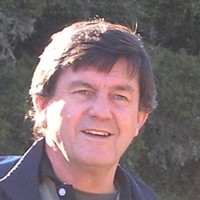
We are very happy to advise that Quail Ridge Country Club is now under new ownership.
The organisation previously owned by Electra Ltd, was taken over by Senior Care Limited Partnership in December 2024, led by Neville Brummer.
Neville is a trained accountant, and left the profession after qualifying to follow a career in financial, business, and general management.
Neville immigrated to New Zealand in 2002 and since has been actively associated with the development of 10 retirement village projects in advisor, management or investor capacities. Neville currently holds equity interests in McKenzie Lifestyle Village and McKenzie Healthcare at Geraldine, Canterbury. He is well versed in the development and construction of retirement villages and has specialist expertise in overseeing the management and operations of both retirement villages and aged care facilities.
He is also an adviser and shareholder of other successful businesses. He has recently retired as a shareholder and director of the HPA Group, which services the Retirement Village and Age Care Industries. HPA provides a broad range of services, including development planning, architectural design, construction and project management. His directorship roles included operations, commercial services, and business development.
Neville was an independent director at Senior Trust Management, which managed a MIS Fund, listed on the NZX Main Board. The fund specialised in funding to the Retirement Village Sector.
He is an independent director at Crossgate Capital, a specialist investor in Cryptocurrencies, which provides investors a simple way to invest in Bitcoin and other crypto assets.
In terms of personal interests, Neville is an active trader on financial markets, and enjoys playing golf and engaging in DIY projects.
Quail Ridge Country Club is excited to have Neville’s knowledge and expertise onboard.