Tony Headland still laughs when he talks about the first visit. “We came up with friends on a road trip,” he says, “We weren’t interested in or shopping for a retirement village.
“We drove through the gate,” says Liz Headland. “And I said I could live here. It was pretty instant.”
At the time, Auckland still defined their lives. Howick. Corporate roles. Coastguard callouts at three in the morning in weather that most people prefer to avoid. “I’d been in the corporate world all my life,” says Tony.
“You’d take me out of that house in a box,” he told Liz once. That was the assumption.
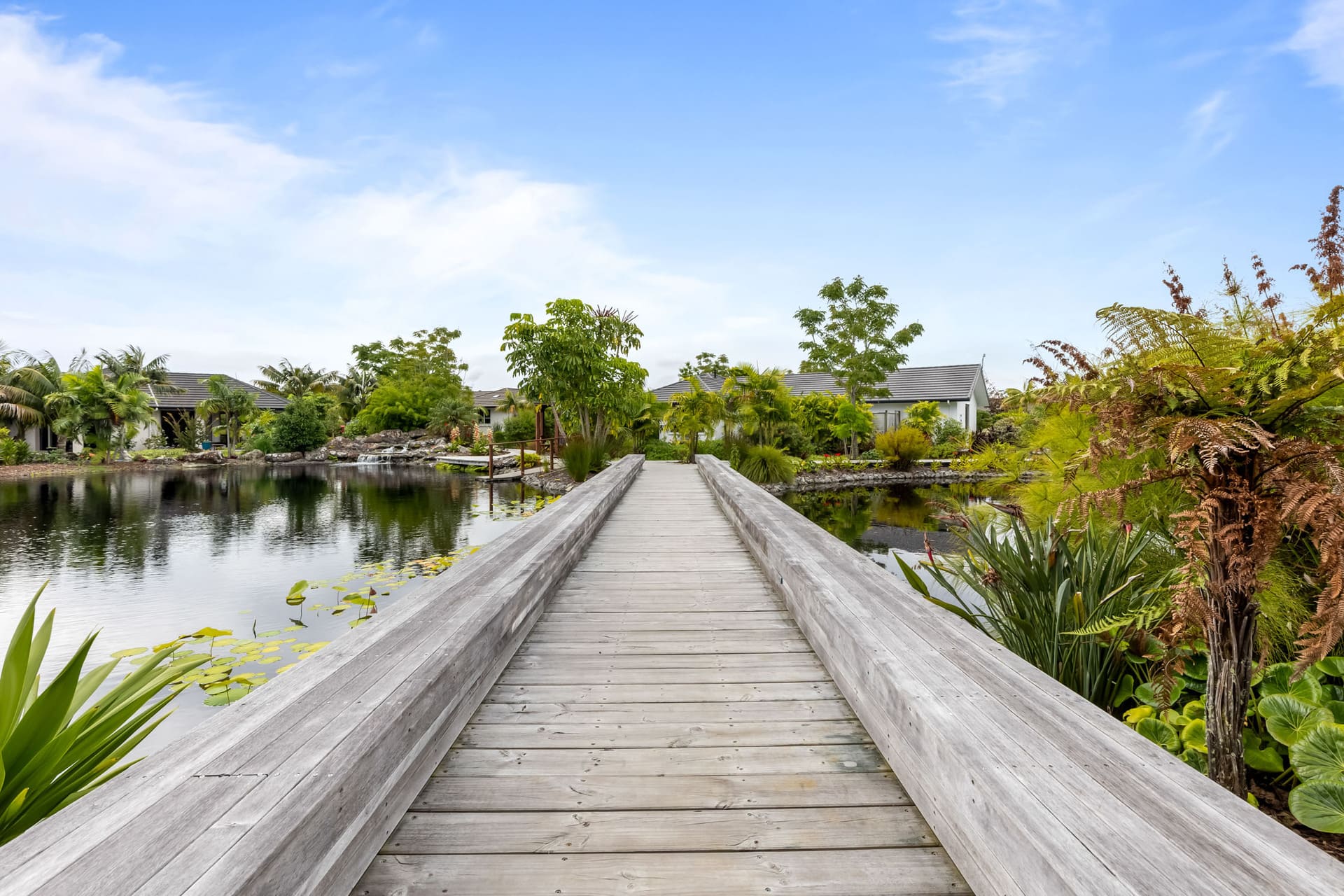
What they encountered at Quail Ridge Country Club in Kerikeri did not resemble what they had filed away in their minds under the phrase retirement village. “The gardens did it,” Liz says.
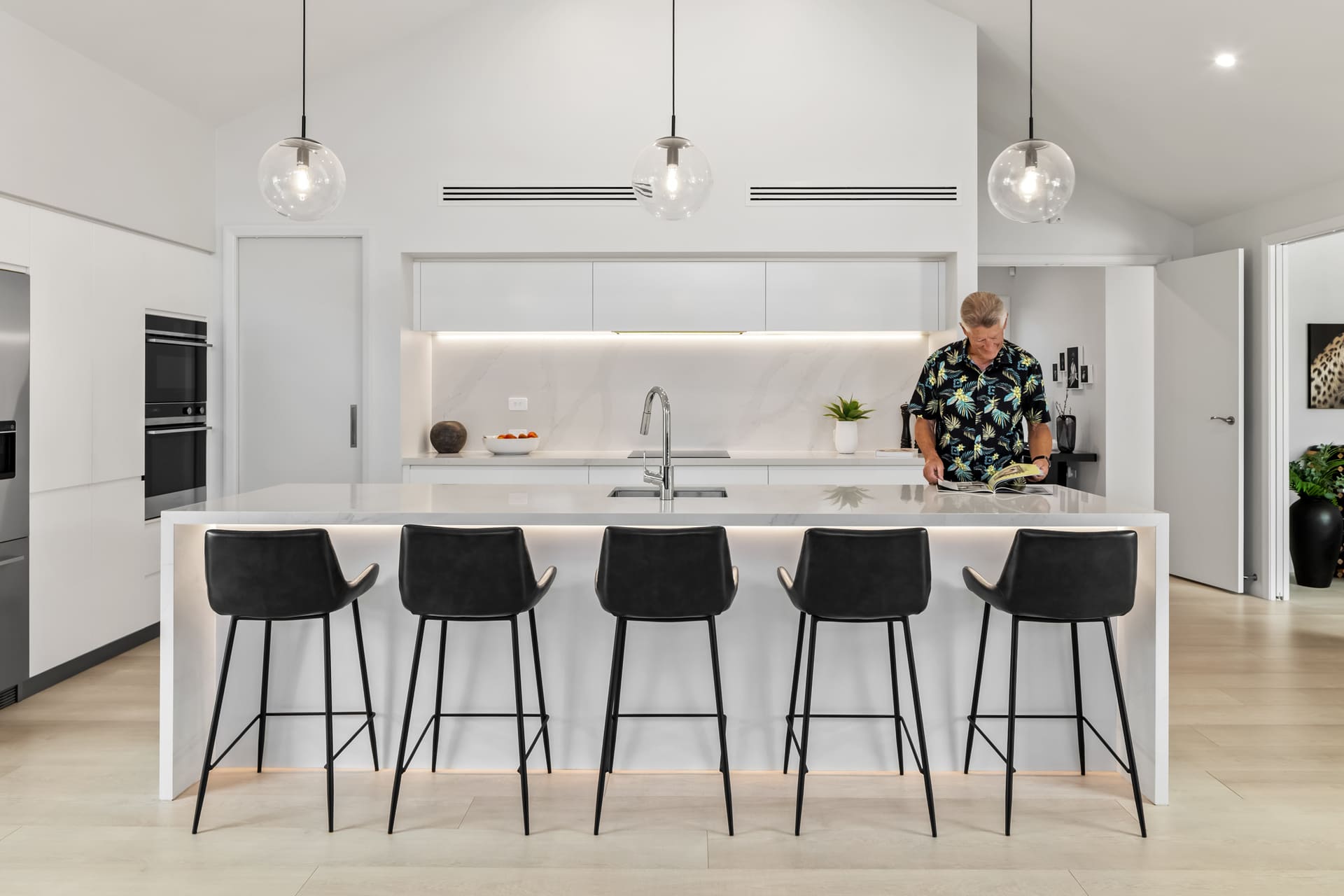
“We fell in love with the gardens. Then we looked at the houses and thought, wow. It didn’t feel institutional. It felt like somewhere people actually lived.”
They did not buy a finished home, but the idea of what could be while standing on what Tony described as “piles of shingle and road metal.”
The section they chose was a corner site, nothing more than ground and a plan. “We said, give us the map and the specs for the house and we’ll tell you if we’re going to sign,” Tony says. “We went with faith.”
It was a risk of sorts, though he does not speak about it as one. “We ended up with the most beautiful home on the most beautiful site.”
The house is large by any measure, around 300 square metres, with a two-hundred-square-metre deck extending its footprint into the landscape. There is a four-car garage, which is less a luxury than a necessity.
“We’re motor vehicle enthusiasts,” Tony says. He owns a 1932 Ford Deuce Coupe, the kind made famous by the Beach Boys, among other vehicles. “Other villages, what you walk into is what you get. Here we chose everything. Colours, flooring, benches, the deck. We extended the garage. We put in a walk-in pantry. We changed windows to sliders. They accommodated us brilliantly.”
Liz sees that flexibility as central rather than cosmetic. “They really let the new buyer choose everything,” she says. “It’s our home.”
For years, their leisure time had been structured around the city. They owned a decent-sized boat and imagined that retirement would allow them to use it more often. “In Auckland we were serious boating people,” Liz says. “We’d go every weekend.”
“But in the last two years here, we used it twice.” The explanation is not a loss of interest but an accumulation of alternatives.
“Total change of lifestyle,” he says. “In Auckland you were lucky if you knew your neighbours. We might wave if they drove past, but you didn’t know their name. Here, there are about two hundred people, and we’ve made some awesome friends. We’ve created our own wine club. We hold progressive dinners. There’s so much to do.”
Liz describes the social life in terms that are less about activity than about assurance. “The first thing about this village,” she says, “if I lost Tony, I will never be alone.”
She has watched other couples go through that transition. “We’ve lost friends, and everybody works in together so that the person is never alone. You can be alone if you want to be. But you’re not left.”
In suburbia, she says, the practicalities after a loss can be overwhelming. “The house is too big. You’ve got to sell it. You’ve got to go and do this or that. Here, you stay where you are because your people are here.”
Tony had spent years volunteering for Coastguard, responding to emergencies during literal dark and stormy nights. After moving north, he shifted to St John.
“Not the emergency side,” he says, “but hospital and patient transport. I know what I’m doing the day before. I’m heading up a small team with three drivers.” The rhythm suits him because it is structured but not consuming.
Liz, who is an artist, spends much of her time painting. “I’m more of a private person,” she says. “I stay at home and do my art.” Recently she has taken up croquet, though not within the village. “Different age group. Different people. You have that choice.” The word choice comes up often in conversation.
They both push back against a perception that retirement villages are defined by frailty.
Through his St John work, Tony has seen other retirement communities. “Most of the time, you hardly see anybody in those places,” he says. “When you do, they’re in walkers or wheelchairs.”
At Quail Ridge Country Club, he says, “people are active. Walking. Swimming. Playing bowls.” He walks six kilometres most days, often along the Kerikeri River track, disappearing into bushland that runs close to the village boundary. “We walk in the most picturesque places. Rainbow Falls is at our front gate.”
Quail Ridge sits surrounded on three sides by the river, about a kilometre from the nearest main road.
“It’s quiet,” Liz says. “Peaceful.” They have become attentive to birdlife in a way that surprised them.
“We didn’t think much about birds in suburbia,” Tony says. “Now we’ve got tuis on our deck drinking from a bowl of sugared water.”
For all the social activity, they insist there is no pressure. “Some go to everything,” Tony says. “But not everybody.”
Liz says there’s no snobbery or cliques. “We’ve heard that happens in some villages. Here, you might not be best friends with everyone, but we all get on.”
They signed up at 65; timing Tony frames as practical. “If you’re not ready, why not come in while you can enjoy it? What’s the point of waiting?”
He dismissed the idea that moving into a village marks the end of something. “People think this is the end of the road,” he says. “It’s not. It’s a lifestyle.” He gestures towards the pool, the workshop, the shared spaces. “Wine rooms, verandas, art room. We’re active and enjoying ourselves.”
Liz sums it up more simply. “It’s better than what we imagined,” she says. “We didn’t imagine the closeness and the friendships we would make. That’s the biggest gain.”
They came north without children nearby to anchor them because their family lives in Australia. What held them back, if anything, was habit. What drew them forward was less about square metres than about atmosphere. “We weren’t thinking retirement village,” Tony says. “We were thinking, this is a nice place to live.”
The distinction matters to them because they don’t describe their move as downsizing or slowing down. They describe it as a reallocation of attention, away from maintenance and towards living.
“Every day feels like a holiday,” Tony says, though he immediately qualifies it. “Not because you’re doing nothing. Because you’re doing what you want.”