In The Tortoise and the Hare, Aesop tells a story that is often misunderstood. It is usually framed as a lesson about arrogance or patience, but its quieter truth is about sustainability.
The tortoise doesn’t win because he tries harder. He wins because his movements can be repeated day after day without relying on bursts of energy or motivation. His progress fits his environment and his capacity, which means it lasts.
That idea matters more in later life than we tend to admit.
Most New Zealanders do not wake up one morning and decide to leave the city, because where we live has a way of becoming the default setting for life. Family lives nearby, specialists and hospitals are within reach, the airport is close enough to feel reassuring, and even friendships that have drifted into occasional contact still sit within the same familiar orbit.
Over time, that closeness begins to feel like a reason to stay, even when daily life has subtly narrowed, not through crisis or dissatisfaction, but through habit.
And yet, for many people, cities like Auckland can begin to feel louder than they need to be, not only in sound, but in pace and expectation. Traffic becomes a constant negotiation, simple errands require planning, and there is often a low-level sense of urgency that lingers long after work has stopped, setting the rhythm of the week. When that pressure doesn’t lift as expected, people notice their days feel busy without necessarily feeling full.
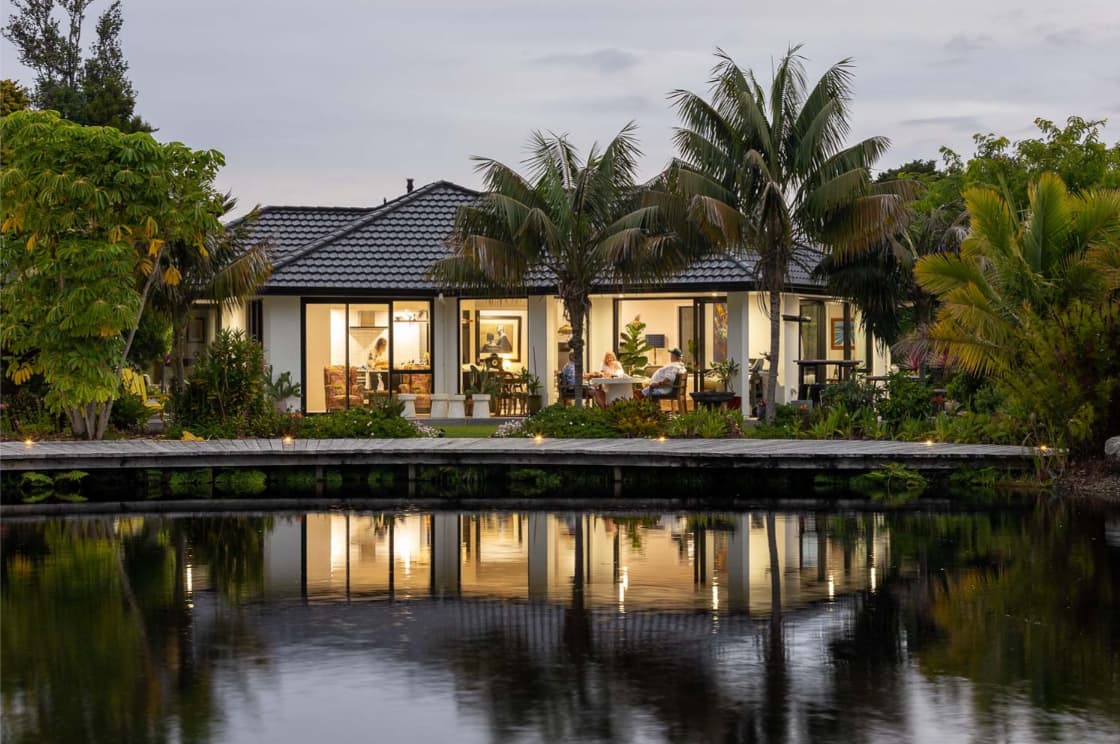
This is often the point when the winterless Bay of Islands enters the conversation, not as an escape or a fantasy, but as a recalibration. Life in the north does not remove choice, but it redistributes it, allowing days to stretch more easily and everyday tasks to require less effort. The outdoors stops being something that needs to be scheduled and instead becomes part of the background, waiting quietly until you feel like stepping into it.
Living in the Bay of Islands changes the texture of daily life in ways that are difficult to measure but easy to feel. Water is closer, walking becomes habitual rather than purposeful, and activities such as golf, cycling, and boating slip naturally into the week rather than being reserved as weekend rewards. This matters because active living only works when it is easy to sustain, not when it depends on motivation alone.
For Kiwi city dwellers, considering relocation, the real question is rarely whether they could live elsewhere, but whether life would genuinely feel better rather than simply quieter. That distinction matters, because silence on its own does not create fulfilment, and space without structure can feel empty rather than freeing.
This is where Quail Ridge Country Club begins to make sense, not because it replaces city life, but because it edits it. The country club setting offers community without obligation, activity without pressure, and structure without prescription, allowing independence to remain intact rather than something that needs to be defended. Like the tortoise’s steady pace, the environment quietly supports consistency rather than demanding effort.
Many people reach this stage of life living in homes that once made sense for busy families but now mostly demand maintenance. Downsizing is often framed as a financial decision, yet the more persuasive argument is time. Fewer responsibilities mean fewer weekends spent fixing or managing, and more capacity for travel, for unhurried family visits, and for days that are allowed to unfold without a checklist.
Of course, relocating north introduces distance, but distance today is different from distance as it once was. Flights are short, drive times are manageable, and visits become planned rather than incidental, which often makes time together more deliberate and, in turn, more meaningful.
Beneath all of this sits a quieter question that New Zealanders do not always articulate until they are already asking it. What, at this stage of life, am I optimising for?
Staying in a city can be the right choice, but so can leaving, not because something is wrong, but because something else may fit the life you want to keep living. Relocating to Kerikeri, and into a community shaped around independence rather than retreat, is less about stepping away than it is about choosing conditions that make living well easier to sustain over time.